



Shielded metal arc welding, also known as the MMA method (Manual Arc Welding), is the oldest and most universal arc welding technique. Despite the development of modern welding methods, MMA is still very popular both in industry and among hobbyists. What makes this method so highly valued? In this article, we will take a closer look at the shielded metal arc welding process, its advantages, and its applications.
What is shielded metal arc welding (MMA)?
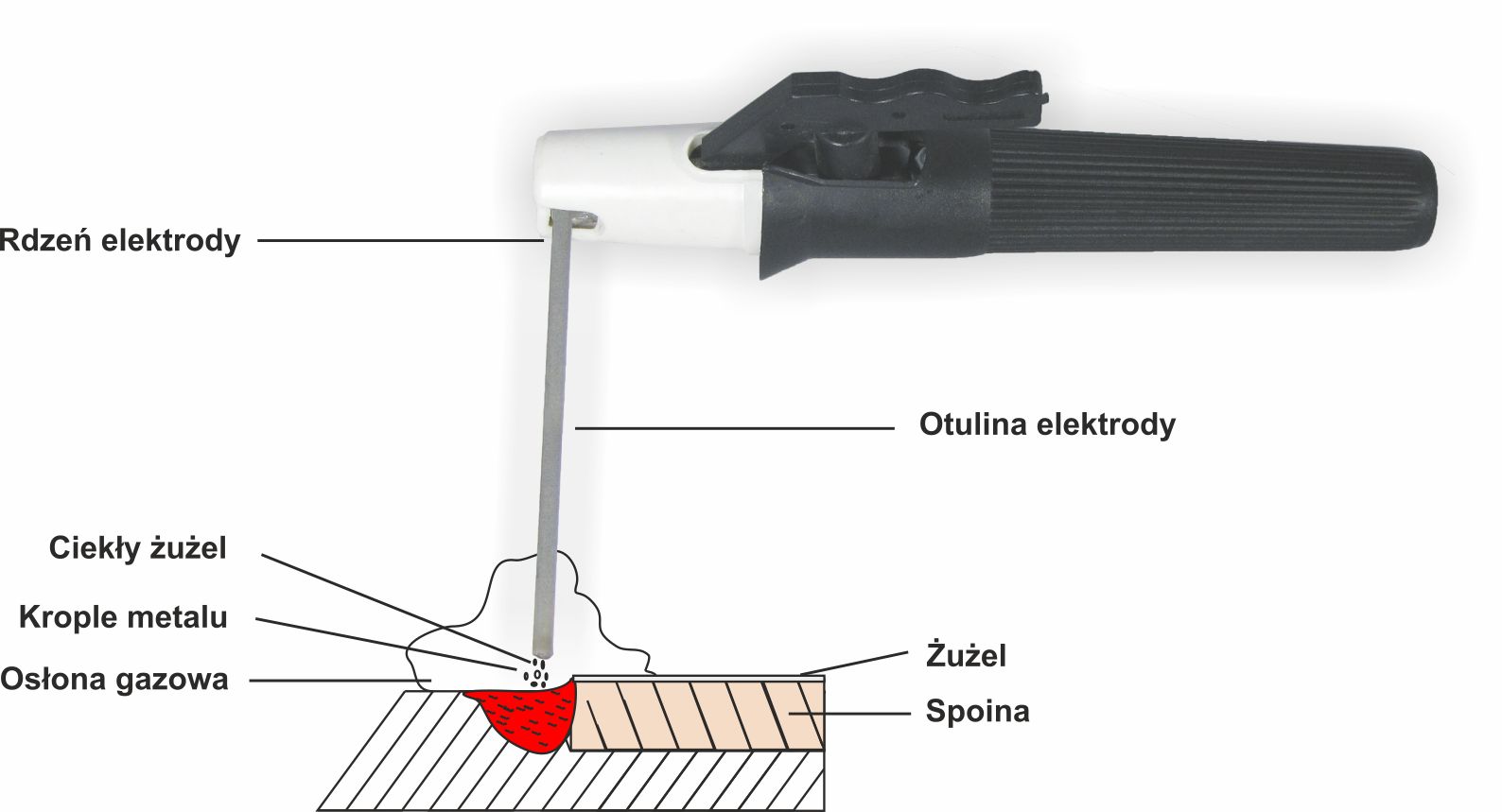
Shielded metal arc welding involves joining two metal materials using an electrode consisting of a metal core coated with flux. The process is based on melting the electrode and the edges of the welded materials as a result of heating by an electric arc. The arc is struck by touching the end of the electrode to the workpiece. As the electrode melts, the welder feeds it toward the welded object to maintain a constant arc length while simultaneously moving its melting tip along the welding line. The melting flux coating releases shielding gases that protect the molten metal from the surrounding atmosphere, then solidifies and forms slag on the surface of the weld pool, protecting the solidifying weld from cooling too quickly and from harmful environmental influences. After completing the weld, the slag must be removed mechanically.
HOW DOES THE MMA WELDING PROCESS WORK?
- Material preparation: To obtain a high-quality weld, the material must first be properly prepared by removing rust and other contaminants from the edges of the welded parts. When preparing the edges, both the thickness of the welded elements and the type of joint, welding position, and design requirements must be taken into account. Most commonly, a “V” groove is used; however, for thicker elements, an “X” groove (for full penetration welding) or a “U” groove (without penetration) works better.
- Electrode selection: Shielded electrodes are used for MMA welding. The choice of electrode type depends on the thickness of the welded elements as well as the welding position. Electrode manufacturers usually specify the optimal welding current and welding position for their products.
- Starting the welding process: To begin the process, the welder creates an electric arc between the electrode and the material to be joined. The arc generates extremely high temperatures, causing the electrode and the edges of the welded elements to melt.
- Weld formation: Under the influence of high temperature, the molten metal from the electrode combines with the base material to form a weld. As the electrode coating melts, it produces a shielding gas that protects the weld from the harmful effects of oxygen and nitrogen in the air, preventing oxidation.
- Finishing the welding process: After welding is completed, the welder allows the welds to cool. Residue from the electrode coating forms slag, which must be removed. Slag removal is crucial to ensure proper weld quality and strength.
| ELECTRODE DIAMETER [mm] |
APPROXIMATE WELDING CURRENT |
| 2.0 | 60 - 80 |
| 2.5 | 75 - 100 |
| 3.25 | 97 - 130 |
| 4.0 | 120 - 160 |
| 5.0 | 150 - 200 |
| 6.0 | 180 - 240 |
ADVANTAGES OF SHIELDED METAL ARC WELDING:
- Versatility: MMA is a method that works well in many conditions. It can be used both in workshops and in harsh outdoor environments (e.g. construction sites). It is independent of shielding gas supply, making it ideal for work in locations where gas could be problematic.
- Simplicity and mobility: Shielded metal arc welding is relatively simple and does not require complex equipment. MMA welders are easy to operate, and the equipment is mobile and can be used in many different locations.
- High weld quality: Although MMA welding is a relatively old technique, it can produce very strong and durable welds. With proper electrode selection and skilled execution, it is possible to achieve high-quality metal joints.
- Material versatility: Shielded metal arc welding can be used on various materials such as carbon steel, stainless steel, cast iron, and even some non-ferrous metals. This is particularly important as it allows different types of steels and metals to be joined in a single process.
- Protection against contamination: The electrode coating not only protects the weld from oxidation but also reduces the risk of contaminants entering the weld, improving its quality.
DISADVANTAGES OF SHIELDED METAL ARC WELDING:
- Productivity: Compared to other welding methods such as MIG/MAG or TIG, MMA welding is less efficient. This is due to the need for frequent electrode replacement and longer welding times.
- Difficulties with overhead welding: Welding in the overhead position is more difficult with MMA due to the risk of molten metal dripping and difficulties in controlling the arc in this position.
- Greater skill required: Although MMA welding is a simple method, it requires significant skill and experience, especially in controlling the welding arc and weld quality. The welder must have good technique to avoid defects such as weld porosity or improper electrode melting.
APPLICATIONS OF MMA WELDING:
Shielded metal arc welding is used in many industries, including:
- Construction: In the construction of steel structures such as bridges, towers, and scaffolding.
- Automotive industry: In the production and repair of automotive components.
- Machinery and equipment repair: Welding industrial machine parts and repairing cracks in cast iron, steel, and other materials.
- Energy industry: In welding pipelines, pressure vessels, and other industrial installations.
- Hobby and craftsmanship: In hobby workshops, for producing small metal components, repairs, and DIY projects.
MMA ELECTRODE WELDERS
If you are looking for a reliable device for shielded metal arc welding (MMA), we recommend inverter welders from the ADORE series by Welder Fantasy. ADORE welders by Welder Fantasy combine modern technology with ease of use. Thanks to the use of IGBT transistors, they offer high efficiency and compact dimensions, making them an ideal choice for both professionals and DIY enthusiasts.
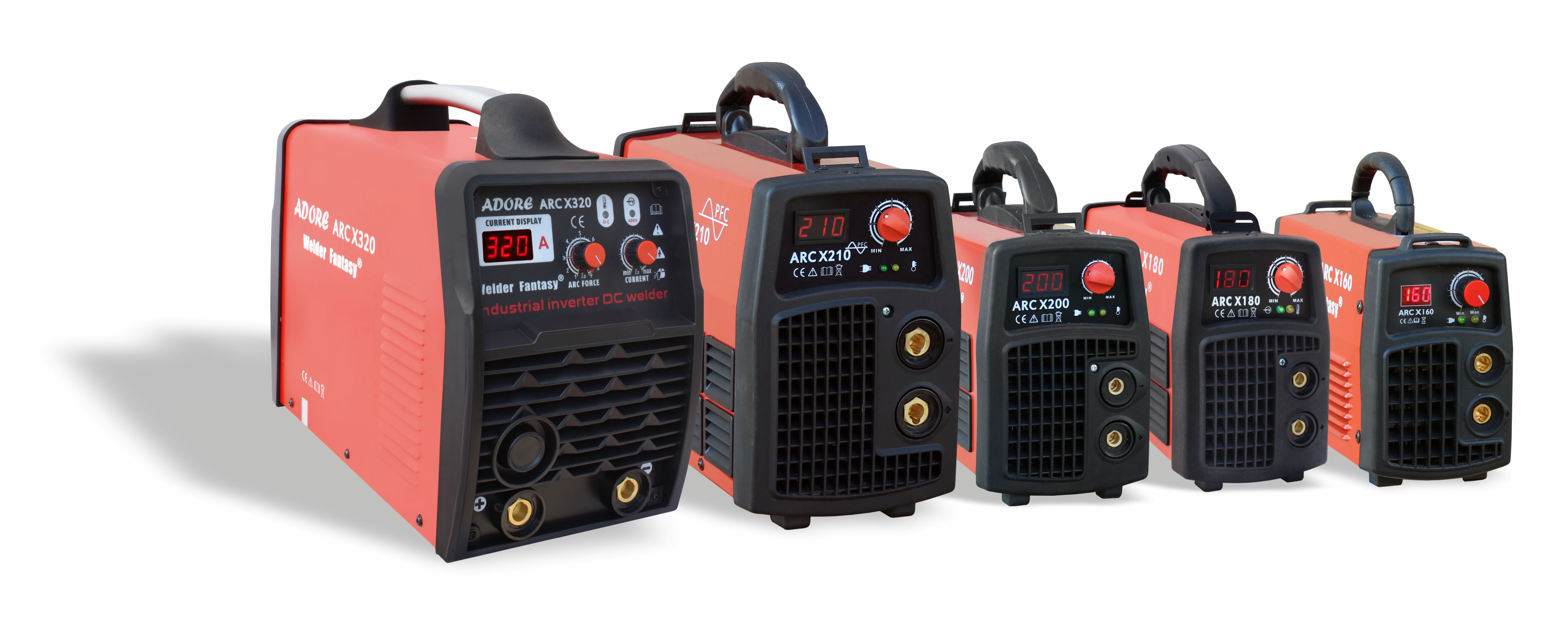
Welder Fantasy inverter welders – ADORE series
SUMMARY
Shielded metal arc welding (MMA) is a technique that, despite the development of modern methods, still holds an important place in industry and among welding enthusiasts. Thanks to its simplicity, mobility, and versatility, MMA is an excellent choice in many situations, especially for tasks that require flexibility and independence from shielding gases. Although it requires some skill and precision, in the hands of an experienced welder it delivers excellent results, and the resulting welds are characterized by high strength and durability.